Mara Griffin · 10 October 2026
The Interplay of Humidity Cycles and Wood Porosity in Maintaining Quality Standards for Fermented Liquids at Industry Gatherings
Humidity cycles play a direct role in how wood barrels interact with fermented liquids such as wine and beer during storage and transport, and industry gatherings scheduled for October 2026 continue to examine these dynamics through technical sessions and demonstrations. Data from cooperage studies show that relative humidity fluctuations between 60 and 80 percent alter the rate at which oak staves expand and contract, which in turn affects the size and connectivity of pores within the wood. Those pores determine how much oxygen enters the liquid and how much alcohol or water evaporates over time.
Wood Porosity Basics in Barrel Construction
American and European oak species used for barrels contain natural vessels and rays that create pathways for gas exchange, and researchers at the Australian Wine Research Institute have measured average pore diameters ranging from 10 to 50 micrometers depending on the grain tightness of the wood. Tighter grain oak from cooler climates tends to show smaller and fewer open vessels, which slows oxygen transmission while still permitting controlled maturation. Barrel makers select staves based on these measurable characteristics so that each container meets consistent performance standards when filled with fermented products.
How Humidity Cycles Influence Pore Behavior
Repeated swings in ambient humidity cause the cellulose and lignin matrix to absorb or release moisture, which changes the effective diameter of those pores from one day to the next. When humidity rises, wood swells and pores narrow slightly; when humidity drops, the structure contracts and pores widen. Studies conducted by the Canadian Food Inspection Agency on barrel-aged products indicate that a 10 percent drop in relative humidity over a 24-hour period can increase oxygen ingress by up to 15 percent in new barrels. Industry events planned for October 2026 will feature live monitoring equipment that records these micro-changes inside actual storage rooms.
Effects on Fermented Liquid Quality Parameters
Oxygen that passes through enlarged pores accelerates oxidation reactions in the liquid, which can shift color, aroma compounds, and tannin structure in measurable ways. At the same time, evaporative loss through the same pores concentrates alcohol and flavor molecules, and the balance between these two processes depends on the prevailing humidity regime. Data collected across multiple vintages show that facilities maintaining steady 70 percent humidity experience 2 to 3 percent lower annual evaporation compared with sites that allow wider daily swings. Gatherings in 2026 will present updated charts from long-term trials that track these concentration effects across different barrel types.
Measurement and Control Practices at Professional Events
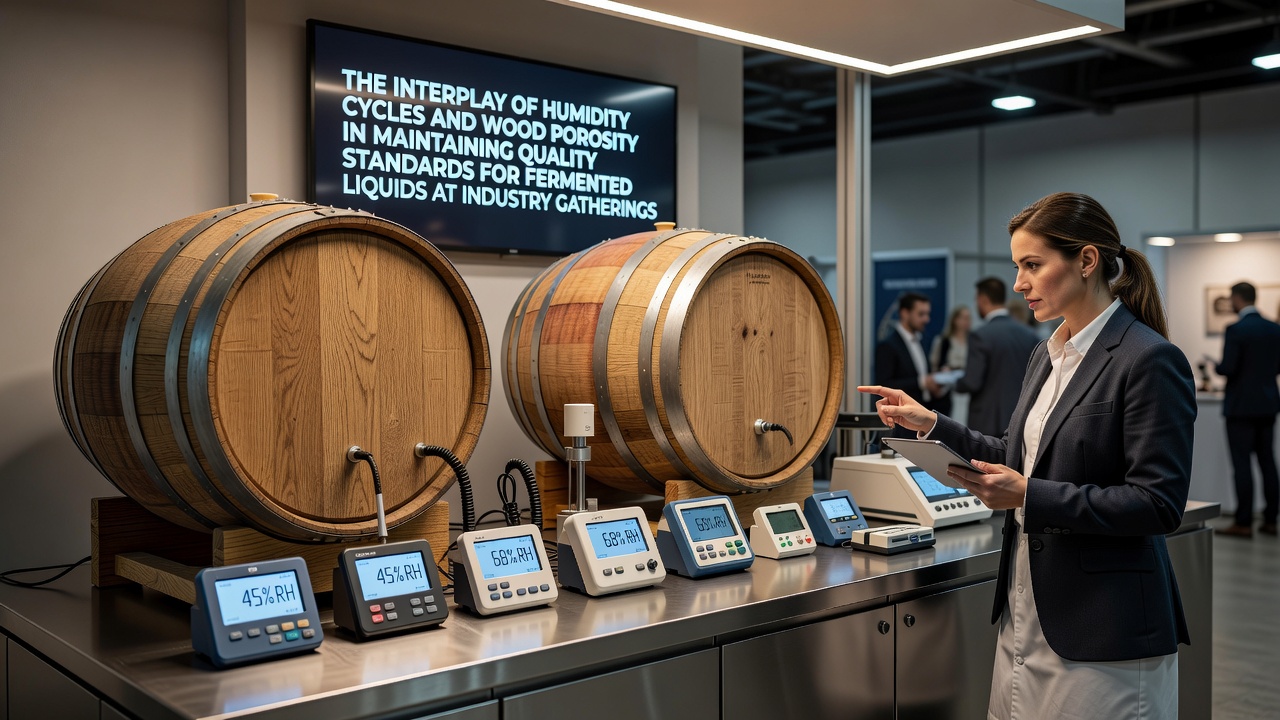
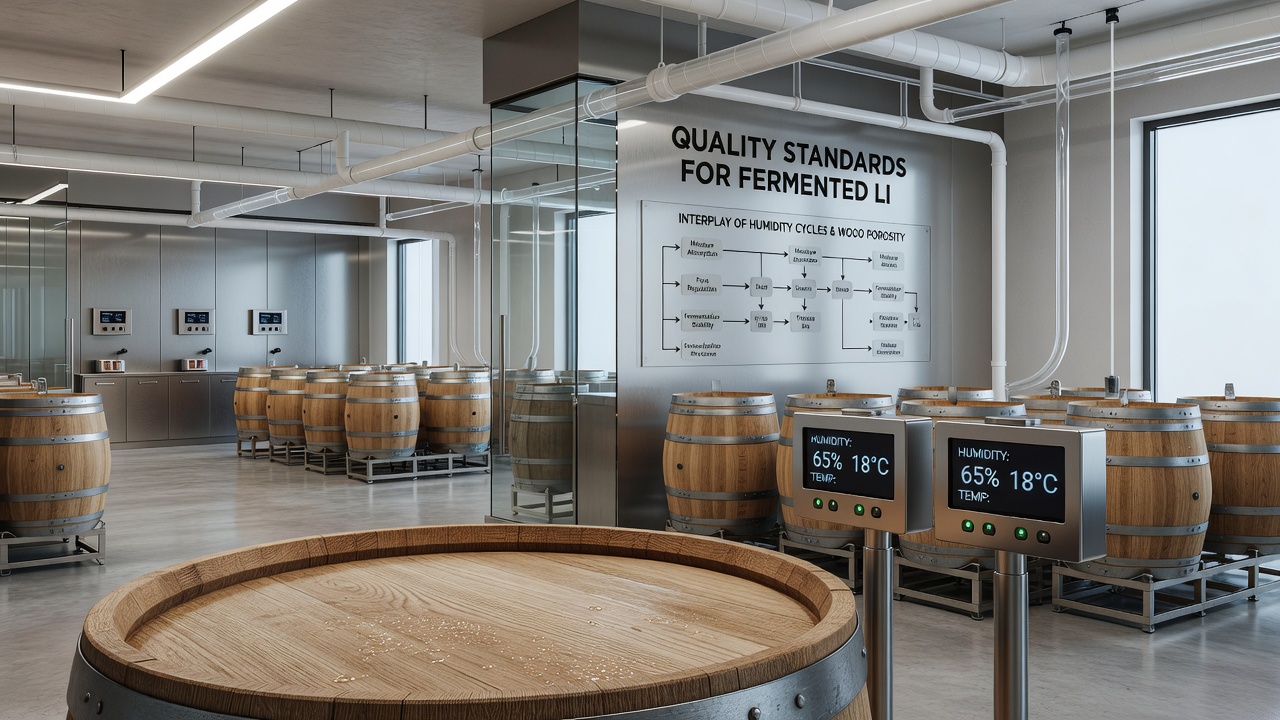
Participants at recent assemblies have demonstrated sensor arrays that log both external humidity and internal barrel conditions every 15 minutes, and similar setups will appear again in October 2026 sessions. These systems allow operators to adjust ventilation or misting cycles in real time so that pore behavior remains within target ranges. Trade groups such as the European Committee for Standardization have published guidelines that recommend maintaining humidity variance below 5 percent over any 48-hour window when high-value fermented liquids are stored in wood. Case studies shared at past gatherings illustrate how one facility reduced unwanted oxidation markers by 22 percent after implementing automated humidity correction based on continuous pore-model predictions.
Regional Variations and Regulatory Context
Storage conditions differ by geographic region because ambient climate sets the baseline for humidity cycles that barrels experience. Facilities in coastal areas of Australia often contend with larger daily swings than inland European cellars, and comparative data released by the Australian Wine Research Institute highlight corresponding differences in maturation speed. Regulatory bodies in the European Union and in Canada require documented environmental records for products destined for export, and these records now include humidity logs tied to barrel performance metrics. October 2026 gatherings will include workshops that compare compliance approaches across these jurisdictions using anonymized facility data.
Future Monitoring Trends
Advances in non-invasive scanning allow operators to estimate effective porosity changes without emptying barrels, and several research teams have presented prototypes that combine ultrasonic readings with humidity history. Such tools reduce the need for destructive sampling while still providing the quantitative data required by quality standards. Observers note that adoption of these methods has accelerated ahead of major industry events, including those scheduled for late 2026.
Conclusion
Humidity cycles and wood porosity together determine how fermented liquids evolve inside barrels, and the technical programs at October 2026 gatherings will continue to translate laboratory measurements into practical storage protocols. Consistent environmental control, supported by regional data sets and standardized monitoring, remains central to meeting established quality benchmarks across the sector.